


As the Dietary Guidelines Advisory Committee (DGAC) wraps up its deliberations in advance of their recommendations to USDA and HHS for developing the 2015 Dietary Guidelines for Americans, their expected recommendations continue to come to light. Throughout the process AMI has anticipated that the DGAC will recommend lowering consumption of red and processed meat, without a strong science foundation or detail to back that recommendation up.
Some of the most interesting analysis from the most recent DGAC meeting was shared in the slides comparing different diets the committee views as ideal patterns for positive dietary health outcomes. One of those patterns is the Mediterranean diet, long hailed by experts like Harvard’s Walter Willett, MD, as one of the healthiest eating patterns. The committee broke down the typical eating pattern for followers of the Mediterranean diet and found that the median intake of red and processed meats is double the amount of USDA food patterns. And yet, when the DGAC moves to its recommendations based on the Mediterranean dietary pattern, they seem to ignore the significant role that red and processed meats play in the diet.
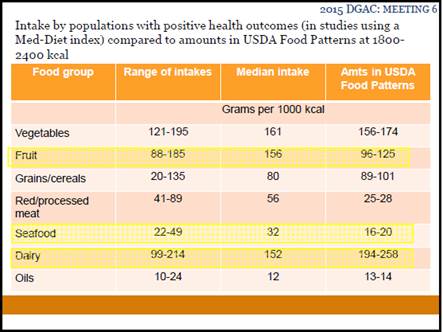
Similarly, the committee looked at data scoring the American diet. Based on their scoring, the average diet score of the U.S. population is 57 of 100 with some segments of the diet better scoring than others. The highest scoring component of the diet: protein foods which received an average of 100 percent. This means that Americans are meeting the protein recommendations for a healthy diet, which was previously confirmed by NHANES data cited in the 2010 Dietary Guidelines for Americans.
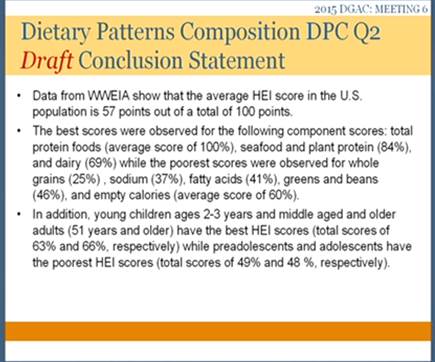
The committee has repeatedly stated that a variety of dietary patterns can have positive health outcomes and the research they present back this idea up particularly as it relates to meat. Yet, despite the evidence presented in the DGAC meeting, the committee continues to generally refer to diets lower in red and processed meat as a dietary pattern associated with positive health outcomes. This is a significant disconnect that the committee should reevaluate. The Dietary Guidelines Advisory Committee is meant to bring together some of the top nutrition and health experts in the country to review the scientific and medical knowledge to prepare evidence based recommendations for the next Dietary Guidelines. When they ignore the evidence presented at their own meeting, it begs the question—are they fulfilling their mission?
